
A cover letter for an unsolicited application serves a specific function: to identify the sender, direct the mail to the appropriate department, and give the recipient a first impression of professionalism even before opening it. In Île-de-France, which accounts for nearly a quarter of unsolicited applications for work-study positions, the volume of mail received by HR departments makes this step even more crucial. A poorly addressed or formatted envelope can end up in a generic bin without ever reaching the targeted recruiter.
Label “unsolicited application” on the envelope: where and why to place it
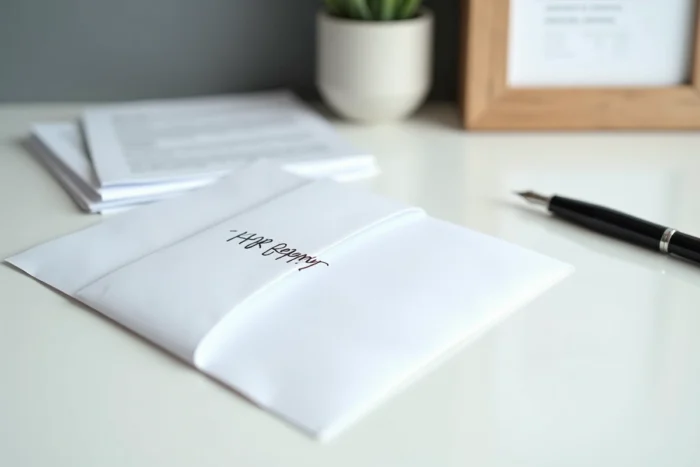
Most guides focus on the recipient’s address but overlook an element that truly changes the mail’s journey within the company: the explicit mention “Unsolicited Application” on the front of the envelope.
Companies now track the volume of unsolicited applications received as an indicator of their employer brand’s attractiveness. A letter identified from the outside facilitates sorting, internal traceability, and transmission to the right contact person. Without this mention, the mail risks being treated like ordinary administrative correspondence.
Place this indication below the recipient’s name or department, before the postal address. If you are targeting a specific position, add the title: “Unsolicited Application – Communication Officer,” for example. Knowing how to write an envelope for an unsolicited application with this level of precision increases your chances of reaching the concerned person directly.

Recipient’s address on the envelope: naming the right contact
Addressing an envelope “To the Human Resources Department” works, but a named letter arrives faster at the right desk. Mail sorting in a company often follows a circuit: reception, secretariat, then distribution by department. A proper name shortens this circuit.
Finding the recruiter’s name
Organizational charts published on institutional websites, the company’s LinkedIn pages, and a simple phone call to the switchboard can provide the name and position of the person in charge of recruitment. Prefer the head of the targeted department over the general manager: an HR manager or department head will read your letter with more attention than an executive who will redirect it anyway.
Structuring the address correctly
The recipient’s address is placed in the right half of the envelope, slightly below the center. Each line follows a strict order:
- Title, first name, and last name of the recipient (or if not available, the name of the department: “Human Resources Department”)
- The mention “Unsolicited Application” followed by the title of the targeted position if you are aiming for one
- The name of the company as it appears on its official materials
- Number, street, any address supplement (building, floor)
- Postal code and city in uppercase
Never exceed six lines for the complete address, a postal standard that ensures timely delivery.
Sender’s contact information and envelope format for an application
The sender’s address is placed at the top left on the front or on the back flap. It must be complete: first name, last name, address, postal code, and city. Some candidates add a phone number or an email address below their postal address. This is a relevant choice if the company wishes to acknowledge receipt quickly, but it is not mandatory.
Choosing the right envelope format
The format depends on the contents. A CV and a cover letter folded in thirds fit into a C5 envelope (162 x 229 mm), the standard format for professional mail. The C4 format (229 x 324 mm) avoids folding the documents and gives a neater appearance upon opening, which matters when a recruiter handles several letters in the same day.
Opt for a white envelope, with a dense enough weight to prevent the contents from showing through. Kraft or colored envelopes should be avoided for this type of correspondence.
Common mistakes that disqualify an unsolicited application envelope
Some technical errors go unnoticed by the sender but are glaring to the recipient.
An illegible handwritten address remains the primary cause of misdirected mail. If your handwriting is difficult to decipher, print a label or use a window envelope with a correctly positioned letterhead so that the address appears in the window.
Insufficient postage leads to a return or a charge to the recipient, which leaves a disastrous impression. Weigh your shipment if you exceed three sheets or use a C4 envelope: postal rates change based on weight and format.
- Forgetting the postal code or reversing numbers: delivery can be delayed by several days
- Writing the company’s name with approximate spelling: always check on the official website
- Using visible correction fluid or crossing out: this suggests a lack of care, take a new envelope
- Sticking the stamp askew or using a fancy stamp: clean and centered postage reflects your professionalism
The care taken with the envelope does not replace the quality of the CV or the cover letter, but it conditions their reception. A well-identified letter, addressed specifically to the right contact, with the mention of the targeted position and an appropriate format, traverses the internal circuit of a company without getting lost. In regions where competition among candidates is strong, this logistical detail is part of the application itself.