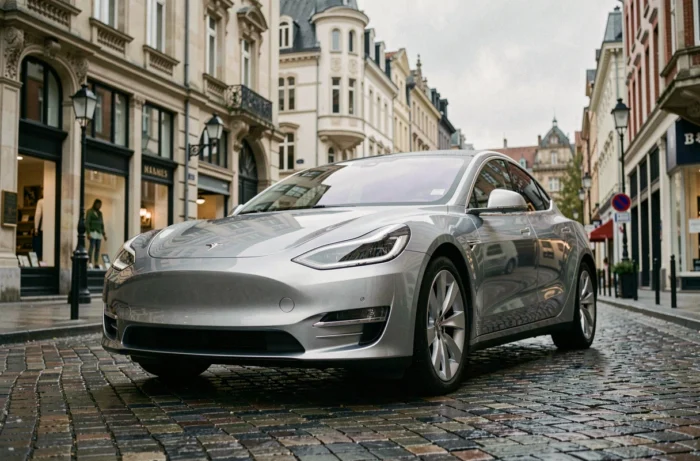
The Belgian automotive market is undergoing a rapid transformation, driven by the electrification of fleets and regional tax reforms. This dynamic reshuffles the cards for Belgian drivers, whether they are driving company cars or purchasing privately. The realities vary depending on the region, the type of buyer, and the targeted market segment.
Electric Used Car Market in Belgium: Access Outside Company Fleets
An individual without professional leasing looking for an affordable electric vehicle naturally turns to the used market. Electric cars represent about 6% of the Belgian used car market, with significant growth expected in 2026. The figure remains modest, but it reflects a very real trend: former company vehicles are now feeding the used car market.
Today, you can find electric vehicles that are two or three years old at prices significantly lower than new ones. The depreciation, which is greater than that of an equivalent combustion vehicle, opens an interesting window for private buyers.
However, there remains a practical point of friction. An employee who charges at the office does not experience the same situation as a self-employed person without a garage. This infrastructure gap partly explains why adoption by individuals remains slower than by professionals, even when the budget allows.
To keep track of these developments over the months, Cars The Stars news regularly covers trends in the Belgian market, both new and used.
Automotive Tax Reform: What Changes by Belgian Regions
Belgian automotive taxation is no longer limited to a single federal scale. The differences between regions increasingly weigh on the wallets of motorists.
Brussels: Overhaul of the Road Tax
Brussels is working on a revamp of its road tax, with one principle announced: a tax bonus for electric cars. For a Brussels driver, the choice of vehicle will have a direct impact on the annual bill, far beyond the purchase price.
Wallonia: Road Tax and Benefits for Electric Vehicles
Wallonia, on its side, is preparing a revision of its automotive taxation, including a road tax and benefits for electric vehicles.
These regional discrepancies complicate comparisons for a Belgian buyer. The total cost of ownership of the same vehicle varies depending on whether it is registered in Brussels, Wallonia, or Flanders. It is no longer possible to reason on a national scale when evaluating a car budget.
Fuel Prices and Affordable Models: The Real Triggers for the Electric Shift
The taxation of company cars has long driven electrification in Belgium. Other factors are now entering the equation.
When the price of diesel exceeds a certain threshold, the cost per kilometer difference with an electric vehicle becomes tangible, even without a professional tax advantage. The rise in fuel prices is prompting motorists to reassess their monthly budgets.
The arrival of more accessible models accelerates this movement. The electric Renault 5 is among the notable registrations in September, and the electric Twingo is starting to appear in Belgian statistics. These vehicles change the game because they fall within a price range compatible with private purchases.
- The electric Renault 5 appeals with its pricing and urban versatility, a profile suited for Belgian home-to-work commutes.
- The electric Twingo targets small budgets and second household vehicles, a segment that has been nearly absent in electric.
- The rise in fuel prices makes the total cost of ownership calculation more favorable for electric vehicles for high-mileage drivers, even without a home charging station.
Automotive Distribution in Belgium: A Reshaping Landscape
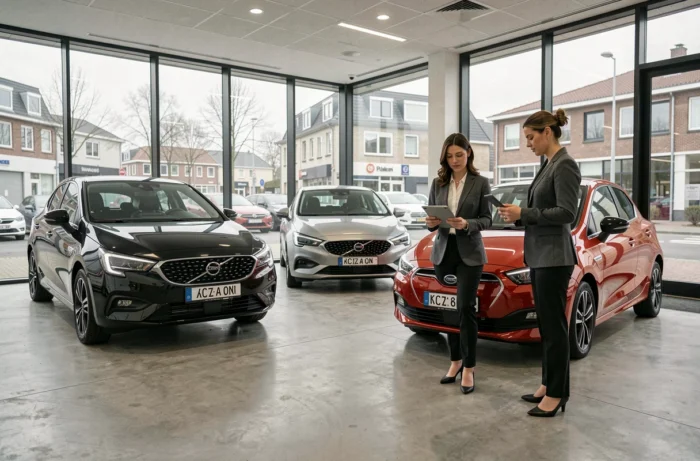
The Belgian automotive distribution network is experiencing notable movements. The market structure is evolving, and these changes have direct consequences for the end buyer.
The dealership network, trade-in conditions, and financing offers vary depending on the distributor group. When buying a new car in Belgium, the choice of dealership weighs as much as the choice of model in the final negotiation.
Individuals and Electric Vehicles in Belgium: Where Do We Really Stand?
The share of electric cars in new registrations is increasing across all categories. Individuals are following the trend, but at a slower pace than professional fleets.
The barrier is not solely financial. Access to a home charging station remains a concrete obstacle for renters in condominiums. Without a reliable daily charging solution, the shift to electric remains an incomplete equation for some Belgian households.
The Belgian market is going through a phase where promising signals (affordable models, regional tax reforms) coexist with structural barriers such as uneven charging infrastructure or the gap between fleets and individuals. The pace of quarterly registrations in the coming months will provide a more reliable indication of the strength of this trend.