
A dog that circles in the living room, scratches the door, or destroys its toys in less than an hour often signals the same thing: its day is not suitable for it. Taking good care of your dog daily is not just ticking off a task list; it’s about building a routine that suits its age, breed, and energy level. And the most common mistakes are not the ones you might imagine.
Dog’s feeding routine: frequency and bowl mistakes
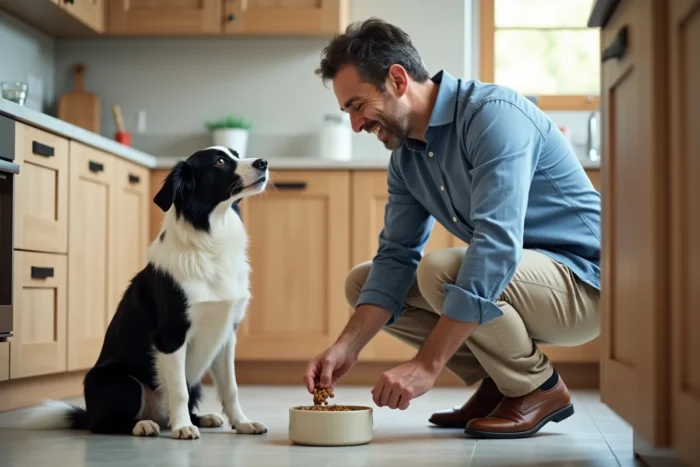
We often start with feeding because it’s the most visible aspect. The reality on the ground is that many owners feed their dogs with free access, with a constantly full bowl. This habit promotes overweight and removes a lever for structuring the day.
An adult dog generally eats twice a day, morning and evening, at fixed times. Puppies need three meals until about six months old, then we switch to two. Removing the bowl after fifteen minutes teaches the dog to eat when offered, not when bored.
Treats pose another common problem. They are useful in training, but their caloric intake adds up quickly. You can also check out everything about AlmAnimal, which gathers practical sheets on dog nutrition and health, a good supplement when unsure between kibble, wet food, or homemade rations.
Fresh water should always be available without restriction. In summer or after exercise, some dogs drink little spontaneously. Adding a bit of warm water to the kibble can encourage hydration.
Physical and mental exercise: adapting activities to your dog
Walking your dog for twenty minutes in the morning is not enough for most breeds. An Australian shepherd or a Malinois has exercise needs that are nothing like those of a French bulldog. Lack of stimulation is the primary cause of behavioral problems in family dogs.
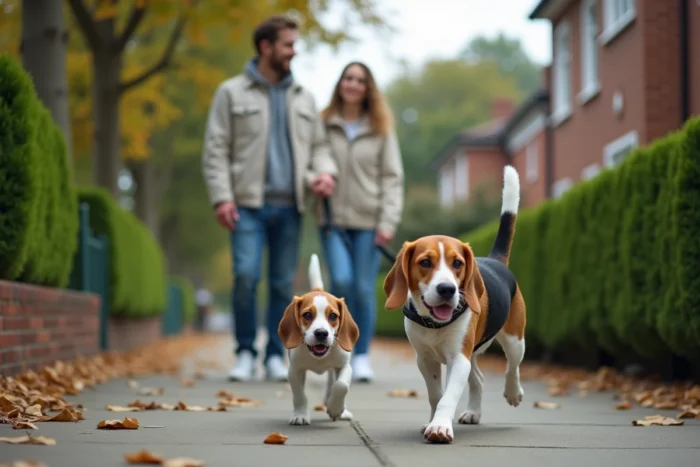
The daily walk serves two distinct functions: physical exercise and olfactory exploration. Letting your dog sniff, mark, and explore a new route stimulates its brain as much as a running session.
Daily mental stimulation
Search games at home complement outings well. Hiding treats in a sniffing mat or a chew toy keeps the dog occupied and reduces separation anxiety. You can also break up its kibble ration and scatter it in the garden or in a puzzle toy.
- Sniffing mats or puzzle toys to slow down ingestion and keep the dog occupied during absences
- Short obedience sessions (five to ten minutes) integrated into walks, not just at home
- Improvised outdoor courses: logs to jump over, benches to go around, stairs to climb, to vary the supports
- Supervised chewing with chew bones suitable for the dog’s size, which also contributes to dental hygiene
Feedback varies on the ideal duration of activity depending on the breeds, but below forty-five minutes of outing per day for a medium-sized dog, you are often below its needs.
Dog hygiene and health: the gestures that owners forget
Brushing the coat, cleaning the ears, monitoring the eyes: these hygiene gestures are mentioned in all guides. However, some subtle daily signals deserve just as much attention.
A dog that repeatedly licks its paws is not necessarily bored. This can signal an allergy, a foreign body between the pads, or joint pain. Similarly, a change in stool consistency over several days warrants a veterinary consultation, not just a change of kibble.
Dental and ear care: two neglected areas
Dog teeth accumulate tartar quickly, especially in small breeds. Regularly offering suitable chew items helps limit buildup, but does not replace a veterinary scaling when tartar is established.
Droopy ears (cocker, basset, labrador) trap moisture and promote ear infections. Checking the ears once a week and cleaning them with an appropriate product prevents most common ear infections.
Legal framework and dog owner’s commitment
Adopting a dog in France now involves much more than just the emotional aspect. Abandoning an animal is classified as a crime and is punishable by criminal sanctions. This legal reality requires careful consideration before adoption regarding concrete constraints: annual veterinary budget, care during vacations, housing adaptation.
At the European level, a new regulation adopted by the European Parliament aims to harmonize the protection of pets throughout the Union, with a stricter framework for breeding and increased control of movements. For the owner, this means checks to be made right from acquisition: identification by microchip, up-to-date health record, traceable origin of the animal.
Dog training: laying the foundations early
Training is not limited to recall and house training. A well-socialized dog between three and four months manages new situations better throughout its life: urban noises, encounters with other dogs, presence of children. Working on socialization early remains the best time investment for an owner.
- Exposing the puppy to varied environments (market, transport, veterinary office) before four months
- Using positive reinforcement rather than punishment, which generates stress and degrades the relationship
- Consulting a professional dog trainer at the first signs of reactivity or excessive fear
A comprehensive guide to caring for your dog cannot cover everything in a single article, but these four areas (structured feeding, appropriate exercise, health vigilance, legal framework) form the foundation of a balanced daily life. A calm dog at home, attentive on walks, and able to stay alone without destroying shows that its routine suits it. If not, it is rarely a character problem, but rather a signal that the routine needs adjustment.