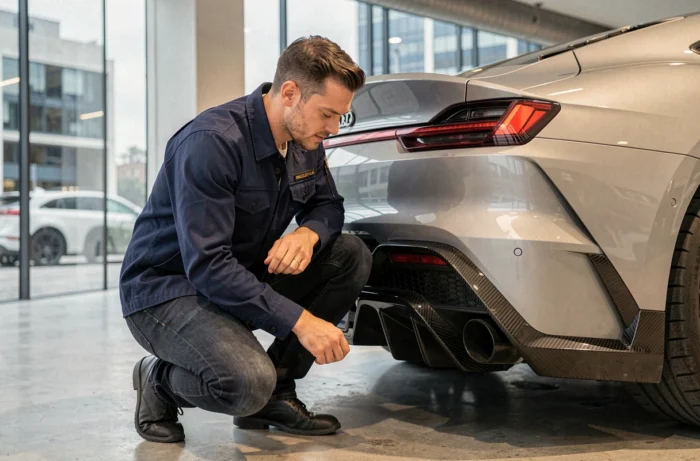
The French automotive market is undergoing a phase of technical and regulatory restructuring that affects both new vehicles and the older fleet. With the rise of electrified powertrains, changes in technical inspections for classic vehicles, and diagnostic tools accessible to individuals, the benchmarks are changing rapidly for those closely following the automotive world.
Technical Inspection of Classic Vehicles: What Changes Since 2026
Enthusiasts of classic cars have long dealt with regulatory ambiguity surrounding technical inspections. Since 2026, vehicles registered under a classic registration will undergo a technical inspection every five years, compared to two years for ordinary vehicles. The evaluation grid is adapted to the manufacturing era of the vehicle, which avoids penalizing the absence of equipment that did not exist at the time of factory release.
For classic motorcycles and two-wheelers, the technical inspection (which comes into effect on April 15, 2024) is spaced five years apart for vehicles manufactured after January 1, 1960. Models prior to this date are completely exempt. These adjustments result from extended discussions with the French Federation of Vintage Vehicles (FFVE), which remains the main point of contact for obtaining the necessary certificate for classic registration.
The threshold of thirty years to qualify for classic vehicle status has been confirmed by the government. For owners of youngtimers (vehicles from the 1990s approaching this threshold), this means gradual access to tangible benefits: lighter technical inspections, the possibility to drive in certain low-emission zones under conditions, and specific taxation for resale. Finding automotive information on Team Auto Passion allows one to keep track of these regulatory developments over the months.

On-Board Automotive Diagnostics: Tools Long Reserved for Professionals
Electronic diagnostics are no longer limited to repair shops. OBD-II (On-Board Diagnostics, second generation) scanners have become more accessible in recent years, and several Bluetooth-connected tools allow users to read engine fault codes from a smartphone.
The difference between a consumer tool and professional equipment lies in the depth of reading. A device costing a few dozen euros reads generic codes (ISO standard common to all manufacturers). A professional tool accesses specific manufacturer codes, real-time data from sensors, and reset procedures after intervention.
- Generic codes (series P0xxx) cover engine, transmission, and emissions faults. They are sufficient to identify a common problem such as a faulty oxygen sensor or an ignition misfire.
- Manufacturer codes (series P1xxx and beyond) vary from one brand to another and require a proprietary database for correct interpretation.
- Advanced functions (injector adaptation, power steering calibration, coding of new parts) remain reserved for professional tools and licensed software.
For an enthusiast maintaining their vehicle, a basic OBD-II reader avoids unnecessary diagnostics in the workshop. Identifying a fault code oneself before consulting a mechanic saves time and allows for a discussion based on shared technical knowledge.
Youngtimers and Taxation: An Often Overlooked Angle
The resale of a classic vehicle follows tax rules distinct from those of an ordinary vehicle. In France, the sale of a classic car may fall under the capital gains tax regime for movable property, with a flat tax or an option for the actual regime depending on the transaction amount. This specificity applies to vehicles whose value exceeds a certain threshold set by the tax administration.
Importing classic vehicles from abroad also involves specific customs procedures. Customs duties and applicable VAT depend on the vehicle’s origin and status (proven classic or simply old). The FFVE certificate plays a crucial role here: without it, the vehicle is treated as a standard used vehicle, without benefiting from the derogatory regime.
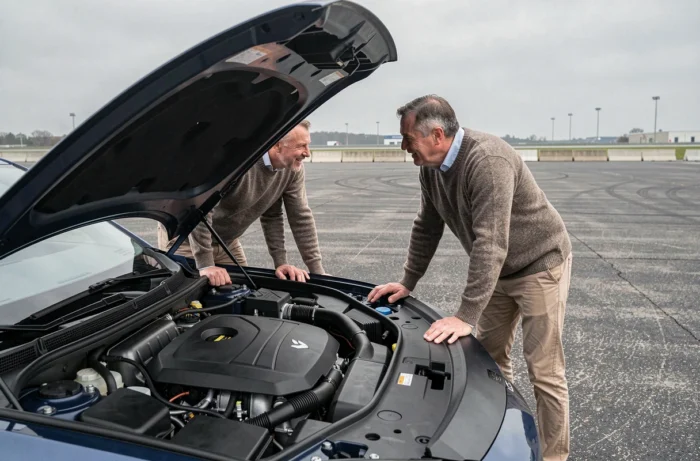
Preparing a Classic Registration File
The process involves requesting a certificate from the FFVE, which verifies the authenticity of the vehicle (compliance of the chassis, engine, and main components with the model identification sheet). The processing time varies depending on the rarity of the model and the availability of technical archives.
Once the certificate is obtained, the request for classic registration is made online via the website of the National Agency for Secure Titles. The vehicle then receives a definitive registration in SIV format, with the mention “classic” on the certificate.
Mechanical Skills: What Enthusiasts Gain from Mastery
Embedded electronics represent an increasing share of the added value of a modern vehicle. The control units manage injection, transmission, braking assistance, steering, and driver assistance systems. For an enthusiast, understanding the electronic architecture of their vehicle becomes a prerequisite for going beyond routine maintenance.
Short training courses in automotive diagnostics, offered by professional organizations or enthusiast associations, generally cover reading electrical diagrams, using measuring tools (multimeter, oscilloscope), and interpreting engine data. These skills complement traditional mechanics without replacing it.
- Knowing how to read an electrical diagram allows one to locate a faulty harness without dismantling half of the dashboard.
- Mastering the oscilloscope helps diagnose a sensor whose values drift without triggering a fault code.
- Understanding communication protocols (CAN bus, LIN bus) provides access to the vehicle’s operating logic, not just its symptoms.
The shift from pure mechanics to mechatronics (the fusion of mechanics and electronics) redefines the profile of the automotive enthusiast. Tools are changing, diagnostics are becoming more complex, but the logic remains the same: understand how a system works before attempting to repair it. For both recent vehicles and collections, this technical rigor makes the difference between maintenance that is endured and maintenance that is mastered.