
Paris remains one of the most visited destinations in the world, but the city has undergone significant practical changes in recent months, particularly regarding transportation. The old cardboard t+ tickets, long the go-to for visitors, have definitively disappeared from the network. This evolution profoundly alters the way one approaches a stay in the capital, whether one is a tourist or an occasional resident.
Parisian transport without paper tickets: the new options to know
Many online guides still recommend buying a booklet of tickets upon arrival. This advice is now outdated. The sale of magnetic tickets ended in November 2025, and they are no longer accepted across the entire metro, RER, bus, and tram network since mid-2026.
To get around, one must anticipate the ticket option even before arriving in Paris. Three main options coexist: the Navigo Easy card (rechargeable at train stations or tobacco shops), the Navigo Découverte card (for longer stays), and contactless bank payment where it is available. Failing to plan for a ticket option can lead to extra costs, particularly the purchase of tickets via SMS or on the bus, which are charged at a higher rate than a standard ticket.
The site Paris Astuce lists updated transport ticket options and allows for quick comparisons of the formulas suited to the duration of one’s stay.
Navigo Day and Navigo Week: the cost-effectiveness calculation has changed
New products like the Navigo Day (one-day pass) and the Navigo Week all zones are designed to replace the old habit of the ticket booklet. The real challenge is to do a simple calculation before loading one’s ticket: beyond a few trips per day, the day pass becomes more cost-effective than buying individual tickets.
Field reports vary on this point depending on visitor profiles. A traveler who stays in the center and walks a lot will not have the same break-even point as a family that takes multiple trips in the suburbs. Taking five minutes to estimate one’s daily travel can help avoid paying double.
Free museums and culture in Paris: beyond the first Sunday of the month
The free admission to museums on the first Sunday of the month is a well-known tip, but it generates queues that can be discouraging. Some national museums, like the Museum of Modern Art of the City of Paris, offer free access to permanent collections all year round, without date restrictions.
For those under 26 who are residents of the European Union, most national museums (Louvre, Orsay, Orangerie) are accessible for free every day. This provision is often unknown to foreign visitors who instinctively pay full price.
Culture Pass and assistance for young visitors
The Culture Pass allows young people to fund cultural outings, including museum entries or shows. The eligibility conditions and amounts have recently changed. Checking one’s eligibility before a stay in Paris can represent substantial savings on the cultural side.
Exploring Paris on foot or by bike: the underestimated routes
Walking remains the most effective way to discover Paris without spending a dime. The available data does not allow for a conclusion on a “best” universal route, but certain paths offer a density of points of interest rarely matched:
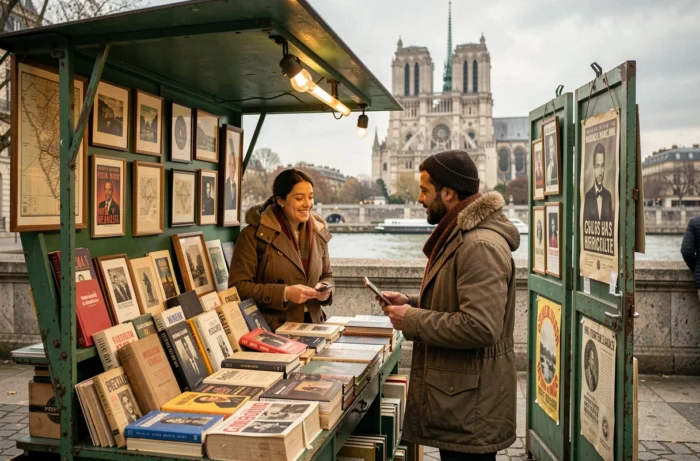
- The banks of the Seine between the Pont des Arts and the Pont de Sully traverse several centuries of architecture in less than an hour of walking, with views of Notre-Dame under restoration
- The Canal Saint-Martin, from the Bassin de la Villette to the Place de la République, allows one to cross lively neighborhoods far from the classic tourist circuits
- The covered passages of the 2nd and 9th arrondissements (Jouffroy, Panoramas, Verdeau) offer a preserved 19th-century Paris, accessible for free
Favoring walking for distances under three metro stations saves both time and money, especially during peak hours when the metro is crowded.
Bike-sharing (Vélib’) is an alternative for covering longer distances. However, the availability of bikes varies greatly depending on the neighborhoods and times. Stations near train stations and major monuments are often empty in the morning. Spotting secondary stations, two or three streets away from the main thoroughfares, significantly increases the chances of finding an available bike.
Eating in Paris without breaking the bank: practical tips
The cost of dining in Paris deters many visitors. A few habits can help reduce the bill without sacrificing quality.
- Parisian bakeries offer lunch deals (sandwich, drink, dessert) at prices significantly lower than those of restaurants, often with excellent quality bread
- Neighborhood food markets (Aligre, Batignolles, Bastille) allow for purchasing fruits, cheeses, and charcuterie at reasonable prices, ideal for a picnic in a park
- Canteens and university restaurants of the CROUS remain accessible to external visitors in some cases, at a price well below that of typical dining
Lunch almost always costs less than dinner in Parisian restaurants. Lunch menus, often absent from the evening menu, represent the best value for tasting refined cuisine.
Food waste apps also allow for collecting discounted meal baskets at the end of the day from bakeries or restaurants. This option works particularly well in central arrondissements where the supply of partner merchants is dense.
Paris is discovered differently depending on whether one prepares their transport options, identifies available cultural free admissions, or chooses to walk rather than take the metro for three stations. The habits that saved time two years ago are no longer all valid, and a minimum of verification before departure changes the nature of the stay.