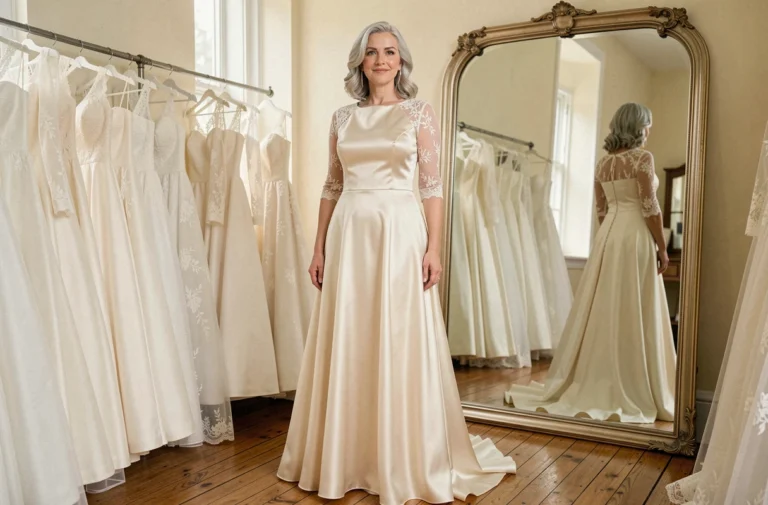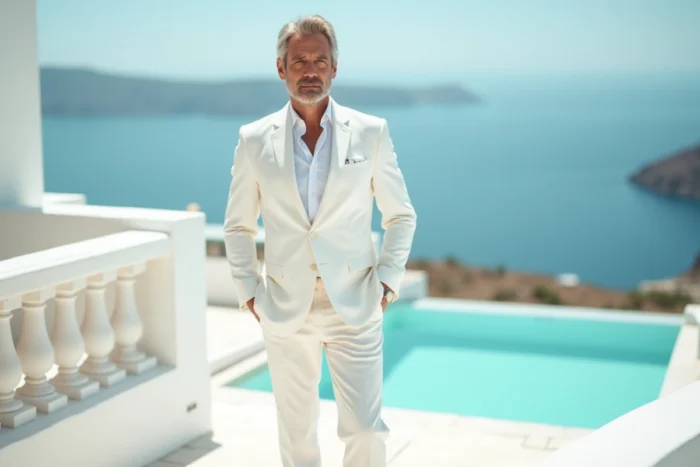
The white worn by wealthy elites serves as a signal on multiple levels. The most soiled color, the most demanding in maintenance, and the most dependent on living conditions, white is never a neutral choice. Understanding why the rich wear white requires examining what this color reveals about the material conditions, social codes, and dressing rituals of the wealthiest classes.
White, black, and neutral colors: what the color choice signals
Black dominates the urban wardrobe. Practical and versatile, it hides stains and effortlessly transitions through the seasons. White works in the exact opposite way: it exposes every mark, every rub, every contact with an imperfect environment.
| Criterion | White | Black | Gray/Beige |
|---|---|---|---|
| Stain resistance | Very low | High | Medium |
| Maintenance cost | High (frequent cleaning, replacement) | Low | Moderate |
| Dominant usage context | Leisure, galas, vacations | City, office, evening | Versatile daily wear |
| Perceived social signal | Material ease, mastery of the environment | Discretion, urbanity | Neutrality, practicality |
| Associated formal dress code | White tie (most prestigious ceremonies) | Black tie (formal evenings) | Business casual |
This table highlights a often overlooked point. White is not worn because it is beautiful: it is worn because one can afford it. In contrast, black remains the rational choice for those who do not fully control their daily environment.
When considering the meaning of wearing white, the gap between these two colors alone summarizes the logic of dressing distinction at play.

Maintenance of white clothing: an invisible cost reserved for the affluent
A white t-shirt costs the same as a black t-shirt. The difference comes after the purchase. Keeping a white garment immaculate requires a particular lifestyle, and this is precisely what this clothing choice signals.
The material conditions of white in daily life
- Private transport or protected spaces: the subway, bus, and public seating damage white. Wealthy individuals travel by chauffeur-driven car, taxi, or their own vehicles, which reduces dirty contacts to almost nothing.
- Constantly renewed wardrobe: a white garment that yellows or gets stained is replaced, not salvaged. Regularly renewing white pieces requires a clothing budget without real constraints.
- Specialized maintenance services: high-end dry cleaning, frequent dry cleaning, suitable storage. These services represent a recurring cost that most people do not factor into their clothing budget.
- Controlled living spaces: cleaned interiors, light furniture, absence of industrial dust. White survives in an environment designed for it.
White clothing acts as a material filter. It does not directly say “I have money,” but it says “my daily life is organized in such a way that this color remains intact.” It is a form of silent wealth, more readable by those who recognize it than by those who discover it.
White tie and gala codes: white as a marker of ceremony
Reducing white to a summer beach or yacht choice would overlook a historical dimension. In the most formal dress codes, white occupies the top of the clothing hierarchy.
White tie, considered the most refined and traditional dress code, requires a white shirt, white waistcoat, and white bow tie. This protocol, reserved for ultra-formal ceremonies and diplomatic events, transforms white into proof of knowledge of customs as well as a sign of financial ease.
Mastery of social codes and dressing distinction
Wearing white in the right context proves that one masters the unwritten rules of a milieu. A white suit at the wrong time betrays ignorance of conventions. At the right time, it confirms belonging. This dual reading makes white a remarkably effective tool for social sorting.
In contrast to black, which adapts to almost all situations without risk of error, white requires knowing where, when, and how to wear it. This demand for contextual accuracy explains why the color white remains associated with circles where dress codes are most codified.

Sustainable fashion and luxury white: a growing tension
The clothing market is evolving towards greater transparency and sustainability. This trend alters the perception of white among affluent consumers. The critique of fast fashion, reinforced by stricter regulations announced in France against ultra-ephemeral fashion, creates an opposition between two relationships to clothing.
On one side, discreet luxury focuses on white pieces made from noble materials, worn for a long time and maintained with care. On the other side, disposable fashion produces low-quality white that yellows after a few washes. White then becomes a revealer of fabric quality and the care given to the garment.
This opposition reinforces the role of white as a class marker. A perfectly preserved white linen after several seasons tells a different story than bleach-treated polyester. The durability of white directly depends on the price one pays for it, not just at purchase, but throughout the garment’s lifespan.
Pop culture and total white look: when color becomes costume
The total white look is not limited to the beaches of Saint-Tropez. In pop culture, the all-white outfit functions as a power suit. From “all white” parties organized by wealthy personalities to the dress codes imposed in certain private clubs, white delineates a reserved space.
This performative dimension of white also explains why the ultra-rich adopt it in contexts of collective leisure. White unifies a group while excluding those who have not received the code. It creates a visual coherence that reinforces the sense of belonging to a closed circle.
The choice of white among the wealthiest transcends the question of taste. It reflects a lifestyle, a knowledge of conventions, and a relationship to clothing where maintenance matters as much as purchase. The simplest color also says the most about the living conditions of the person wearing it.