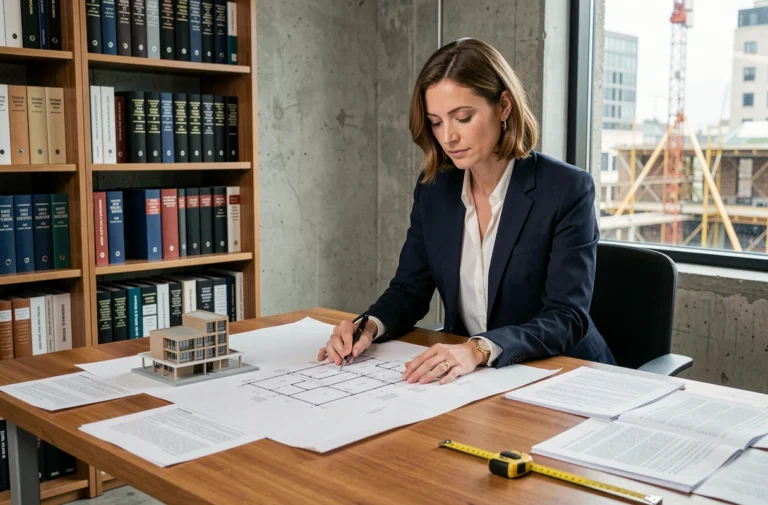
The sounds of footsteps, running in the hallway, toys falling to the ground: life with children in an apartment creates a background noise that not all neighbors welcome in the same way. Since April 2024, the codification of abnormal neighborhood disturbance in the Civil Code has changed the legal benchmarks on the subject. Understanding this new framework allows for a better understanding of the boundary between normal life in a building and sanctionable nuisance.
Article 1253 of the Civil Code: what the 2024 law changes for children’s noise
Law No. 2024-346 of April 15, 2024, has included abnormal neighborhood disturbance in Article 1253 of the Civil Code. Before this text, the concept relied exclusively on jurisprudence, without explicit legal basis. The codification clarifies a decisive point: liability is automatic.
In practical terms, a neighbor complaining about the noise of children in the apartment above no longer has to demonstrate a fault on the part of the parents. However, they must prove the abnormal nature of the nuisance, assessed according to four criteria: intensity, duration, repetition, and context of the building.
This assessment grid already existed in jurisprudence, but its inclusion in the law makes it more directly enforceable during mediation or a formal notice from the landlord. The owner, tenant, or simple occupant can be held responsible, which broadens the scope of concerned parties in co-ownership.
Baby cries and children’s running: the legal distinction between normal noise and nuisance
Legal analyses published in 2026 remind us that the cries of a baby are normal inconveniences of apartment living. No court has ever sanctioned parents solely because their infant was crying, even at night.
The situation differs for older children whose running or shouting continues late or repeats daily over long periods. The Angers Court of Appeal, in its decision of February 28, 2023, confirmed the eviction of tenants whose children generated continuous running noises and screams, despite several formal notices from the landlord.
The practical distinction can be summarized as follows:
- Noises related to age (infant cries, a toddler’s first steps) fall under normal life and cannot form the basis for legal action
- Repeated behavioral noises (prolonged running, shouting at late hours, objects thrown to the ground) can be classified as abnormal if their intensity and frequency exceed what a reasonable occupant should tolerate
- The context of the building matters: an old building with poor sound insulation does not produce the same expectations as a recent construction built to current acoustic standards
This distinction guides both parents and neighbors in assessing what falls within tolerance or legitimate action.
Sound insulation and layout: concrete levers to reduce noise nuisances
Before reaching a conflict, several mitigation measures exist. Their effectiveness varies depending on the type of noise and the layout of the housing.
Impact noise on the floor
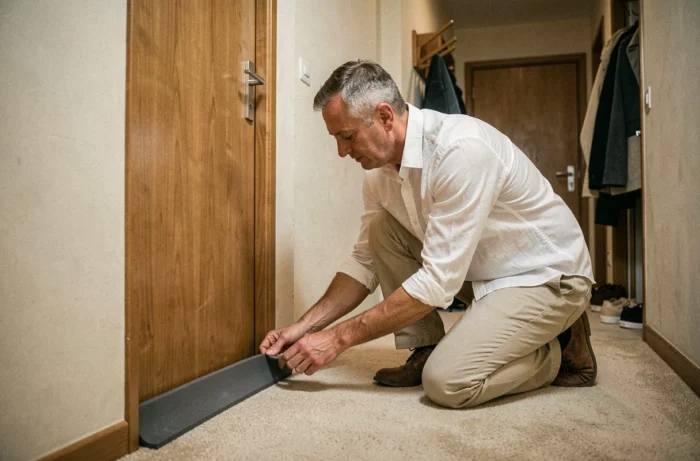
Children’s running produces impact noises transmitted through the slab. Thick carpets placed in living areas and the hallway significantly reduce this transmission. Installing a soundproof underlay beneath a soft floor covering is a more durable solution, especially during renovations.
The condominium regulations sometimes impose a type of flooring or a minimum level of sound insulation during work. Checking this point with the property manager avoids future disputes with downstairs neighbors.
Aerial noises (screams, loud voices)
Screams pass through lightweight partitions more than slabs. Doubling the adjoining walls with a soundproofing counter-wall improves sound attenuation but involves significant work. For tenants, this option requires the landlord’s agreement.
Simpler measures work as complements: heavy curtains, bookshelves positioned against the adjoining wall, closing windows during noisy playtime.
Mediation and steps before judicial recourse in co-ownership
Directly going to court remains rare and costly. Mediation is the first recommended recourse by legal professionals and property managers.
The usual sequence follows a progressive order:
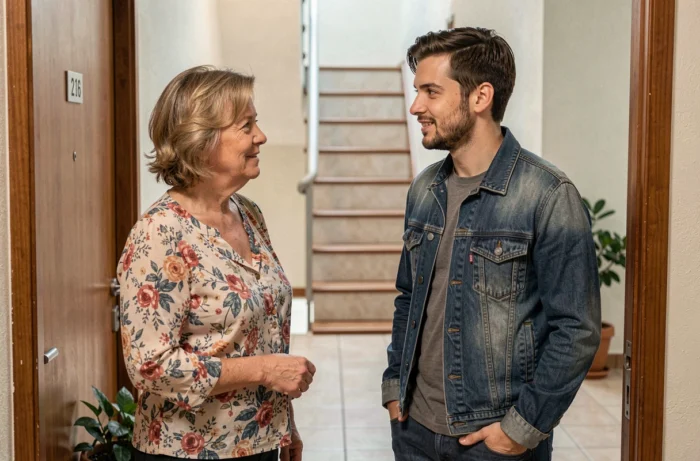
- Direct verbal exchange between neighbors to signal the problem, describing the times and nature of the noise without accusation
- Written letter to the neighbor, with a copy to the property manager if the co-ownership has internal regulations specifying acoustic obligations
- Engaging a mediator or conciliator (free), who can propose an amicable agreement
- Formal notice by the landlord if the tenant does not respond, a prerequisite for possible lease termination
The landlord has an obligation to act when a tenant causes an abnormal neighborhood disturbance. Since the codification of 2024, their automatic liability can be engaged if they remain passive in the face of documented complaints.
Gathering evidence
If the situation persists, reports from a bailiff, written testimonies from several neighbors, and a dated log of nuisances (times, duration, nature of the noise) form the basis of an admissible file. The repetitive and prolonged nature weighs more than the occasional intensity in the assessment of abnormal disturbance by the courts.
Acoustic measurements conducted by a certified professional strengthen the file, but their cost limits them to the most contentious situations.
Coexisting in an apartment with children relies on a balance that neither law nor carpets can fully resolve. Article 1253 of the Civil Code now establishes a clear framework, but the quality of dialogue between neighbors remains the most determining factor to prevent a noise of footsteps from becoming a legal procedure.