A sun-exposed windowsill, a five-minute longer walk, a planter placed on a two-square-meter balcony: you don’t need to live facing a forest to bring nature into your day. The real barrier is not a lack of desire, but the absence of method when living in a very mineral environment.
Integrating nature into daily life relies on short, repeated actions that are adapted to the space you actually have.
Micro-exposures to nature in the city: what works without a nearby park
When the nearest green space is a twenty-minute walk away, you eventually stop going. The solution lies in daily micro-exposures of a few minutes, integrated into existing routines rather than added as an extra.
A detour through a tree-lined street between the subway and the office, a lunch break taken on a bench near a row of linden trees, a coffee enjoyed with an open window overlooking an inner courtyard tree: these brief contacts with the living matter. A study reported by the University of Edinburgh links access to well-maintained urban woodlands with a lower prescription of antidepressants and anxiolytics. We’re talking about proximity, not Sunday hiking.
On the ground, feedback varies depending on the neighborhood’s configuration, but a few principles remain stable. We seek water, vegetation, or sky, in that order of priority. A meta-analysis published in 2024 in ScienceDaily indicates that water-related spaces offer the most significant emotional benefits, followed by gardening and agricultural activities. Even a public fountain or an urban canal is enough to change the sensory perception of a journey.
Initiatives like Faites De La Nature help identify nearby nature events, even in dense urban areas, to anchor these micro-exposures in a collective framework.
Indoor plants and balcony gardening: transforming a small space into a green zone
The effect of a pot of basil or a fern placed next to the screen is often underestimated. Biophilic design, which involves integrating natural elements into living and working spaces, is gaining increasing interest in European urban policies. The EU Nature Restoration Regulation, which came into effect in 2024, encourages the integration of these principles into large-scale urban planning.
At our level, this translates into simple actions.
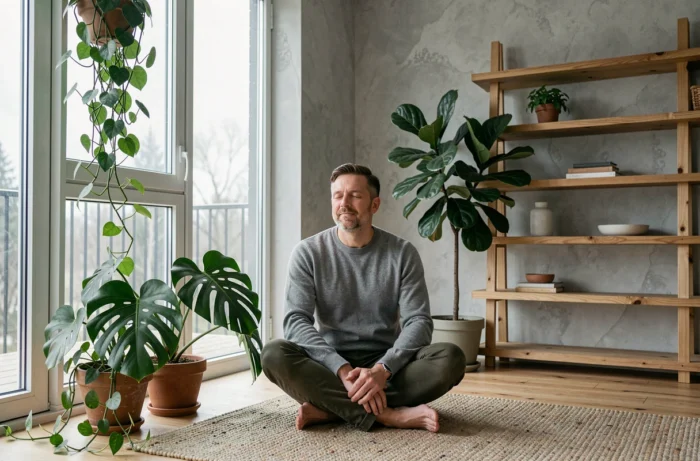
- Install two or three air-purifying plants (pothos, spider plant, peace lily) in the rooms where you spend the most time, to create a permanent visual contact point with the living.
- Set up a planter on a balcony or windowsill with herbs (mint, thyme, chives): the act of harvesting a few leaves before cooking transforms a domestic task into a micro-nature ritual.
- Sprout seeds on the kitchen countertop: lentils, radishes, and watercress grow in a few days without any equipment, and making plant growth visible daily changes your relationship with time.
Gardening, even on a miniature scale, is among the outdoor activities most correlated with positive effects on mental health according to the aforementioned meta-analysis. No need for a garden to garden: one square meter of balcony is enough to grow cherry tomatoes or strawberries.
Adapting plant choices to actual light conditions
A north-facing apartment does not receive the same light spectrum as a south-facing balcony. Before buying, measure the duration of direct sunlight over a week. Shade plants (ferns, pothos, aglaonema) tolerate less than four hours of indirect light. Mediterranean herbs require at least five hours of direct sunlight.
Misaligning plant and light is the primary cause of failure. You lose the plant, and with it, the motivation.

Reducing stress through nature without leaving your neighborhood
The question often arises: how to regain the anti-stress benefits of nature when living in a dense urban environment, without quick access to a park or forest? The answer is two words: deliberately engage the senses.
The sound of flowing water (even a small indoor fountain), the smell of wet earth after a rainstorm, the feel of hands in soil while repotting a plant: each sensory stimulus related to the living decreases cortisol production. We replicate part of the “forest bathing” effect without the forest.
Specifically, three habits take less than ten minutes a day:
- Open the window upon waking and listen to the birds for two minutes, without screens or podcasts. In the city, the songs of blackbirds and tits remain audible even in dense neighborhoods, especially between six and eight in the morning.
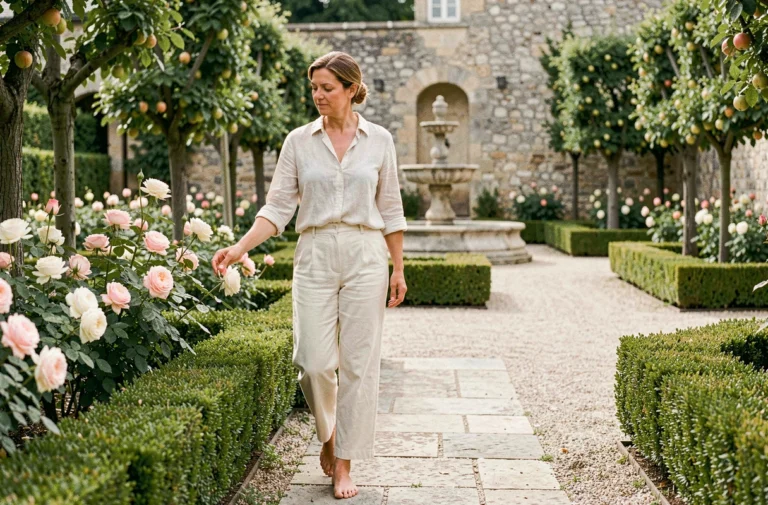
- Walk barefoot on grass, dirt, or sand whenever the opportunity arises (a park, a courtyard, a riverbank). The foot contact with natural ground activates a sensory feedback very different from concrete.
- Replace artificial background noise (music, radio) with a natural ambiance recorded during a concentration task. It’s a substitute, not an equivalent, but the effect on heart rate and breathing remains measurable.
Water as a sensory shortcut in urban environments
Canals, fountains, ponds, and even simple puddles after rain create a visual and auditory break in a mineral landscape. If a water point exists within a ten-minute walk, integrating it into a daily route is the simplest lever to increase nature time without extending the day.
Integrating nature at work and in shared spaces
Placing a plant on a desk is not just decoration. Biophilic design in the workplace reduces cognitive fatigue and improves concentration on long tasks. Companies that install green walls or plant boxes in open spaces notice a change in the sound ambiance: vegetation absorbs some of the high frequencies.
For those working from home, the challenge is the same. Positioning your workstation facing a window overlooking greenery, even a street tree, changes the quality of visual breaks. In the absence of a green view, a static wallpaper depicting a natural landscape is less effective than a real plant placed next to the keyboard.
Daily contact with nature does not require large spaces or special equipment. It relies on a succession of layout choices and sensory micro-habits, calibrated according to the available space and time. A balcony, a windowsill, a slightly modified route: every point of contact counts, as long as it is regular.