
An online home delivery service refers to any platform that allows you to order a product (meal, groceries, packages) and receive it at a chosen address within a defined time slot. The principle seems simple, but the choice of delivery method, carrier, and level of tracking influences both satisfaction and the final price paid by the consumer.
Order Tracking and Transparency: What Platforms Don’t Highlight
Delivery speed has long been the number one criterion. It is no longer the only determining factor. Consumer expectations in France have shifted towards transparency and control over the delivery process.
According to a recent study, 52% of consumers want delivery confirmation via SMS, and 50% want to be able to geolocate their package on the day of delivery. These two features are not always offered by home delivery services, including the most well-known ones.
Before confirming an online order, check if the platform offers proactive tracking (automatic notifications at each stage) or passive tracking (a simple tracking number to check manually). The difference is especially noticeable for meal or perishable goods orders, where an unreported delay can render the product unusable.
To delve deeper into how a dedicated platform works, the user guide for www labonne livraison fr details the ordering steps and available tracking options.
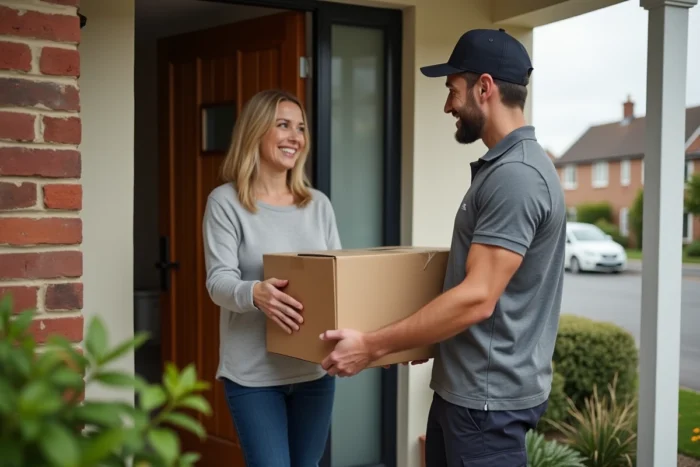
Home Delivery or Pickup Point: When Home Becomes a Poor Choice
Delivery outside the home (pickup point, automatic locker, click and collect) now represents over 30 to 40% of e-commerce deliveries in France. This proportion increases every year, and the reasons are both economic and practical.
Three Situations Where Home is Not the Best Option
- The basket is of low value (less than a few euros margin): home delivery fees absorb a disproportionate share of the total amount. Picking up at a point often costs two to three times less for both the customer and the seller.
- The geographical area is poorly served: in rural or suburban areas, home delivery times lengthen and slots become scarce. The nearest pickup point may offer a shorter timeframe than the carrier’s route.
- Absence at home is predictable: for working individuals without a building caretaker, each failed delivery attempt generates a reschedule, a new slot to arrange, and sometimes a return to the warehouse. The locker or pickup point eliminates this risk.
The choice of delivery method depends on the basket, urgency, and area, not on an abstract preference for comfort. An efficient online home delivery service always offers several options at the time of payment.
Delivery Contract and Consumer Rights in France
When a consumer places an order online, a distance selling contract is formed. This contract includes an obligation to deliver within the announced timeframe, or failing that, within a maximum period of 30 days (Consumer Code).
In case of delay, the customer can formally request the professional to deliver within a reasonable additional timeframe. If delivery still does not occur, the contract can be resolved, and a refund must be issued within 14 days.
Logistics Penalties: What Has Changed
The DGCCRF has published an updated version of its guidelines on logistics penalties. The principle reiterated: fault, responsibility, and damage must be demonstrated before any penalty is applied by a distributor to a supplier. The cap is refocused around the value of the relevant category.
For the consumer, this means that home delivery platforms cannot hide behind the carrier to refuse compensation. The online seller’s responsibility remains engaged towards the end customer, regardless of the transport provider used.
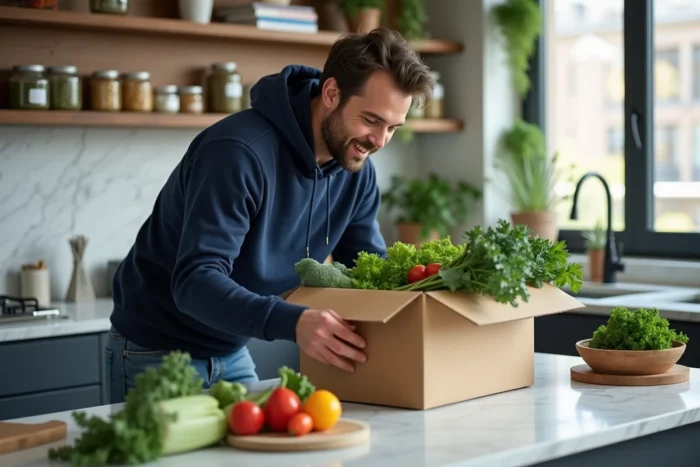
Concrete Criteria for Choosing an Online Delivery Service
Comparing home delivery services solely on price or announced delivery time gives an incomplete picture. Several less visible parameters make a difference on a daily basis.
- Granularity of time slots: a 2-hour slot is more restrictive than a 1-hour slot. Some meal delivery platforms offer real-time tracking that makes the time slot almost unnecessary, while package delivery services often stick to wide windows.
- Policy in case of absence: check if the service allows for a secure drop-off (at a neighbor’s, in a designated location) or systematically imposes a new paid attempt.
- Return and refund conditions: for food products or prepared meals, returns are generally not possible. The service must then specify its refund policy in case of damaged or non-compliant products.
- Actual geographical coverage: displaying an eligible postal code does not guarantee equivalent service everywhere. Delivery times can vary significantly from one neighborhood to another within the same city.
A good reflex is to place a first small order to test the actual service level before committing to recurring purchases or delivery subscriptions.
The market for online home delivery services is structured around tracking transparency, flexibility of reception methods, and respect for contractual obligations. Testing the service on a small order remains the most reliable filter before establishing a purchasing habit.